


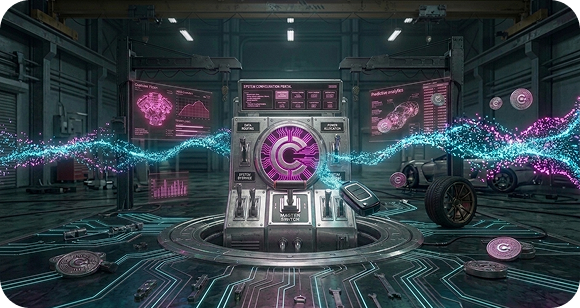
For over a century, the physical car key and the paper title have been the ultimate symbols of automotive ownership. But as the digital economy accelerates, these traditional methods are beginning to show their age. The multi-trillion dollar automotive industry relies on an outdated, centralized infrastructure that is heavily dependent on intermediaries, creating friction, fraud, and inefficiency at every turn.
The next evolution of automotive finance is not just about how we drive, but how we prove, manage, and transfer ownership. Through the power of Web3, the transition from paper titles to Non-Fungible Tokens (NFTs) is building a new standard for transparent vehicle ownership.
Here is how blockchain technology is replacing the filing cabinet with an immutable digital ledger.
The Problem with Paper: A System Weighed Down by Centralization
Currently, buying or selling a vehicle requires navigating a maze of centralized intermediaries—dealerships, banks, insurance brokers, and government registries. This system creates several inherent vulnerabilities:
- Opaque Histories: Paper records and centralized databases are prone to human error, loss, and even manipulation. Verifying a vehicle’s true history, accident reports, and ownership lineage can be a frustrating and uncertain process.
- Slow Transfers: Transferring a paper title across state or national borders can take weeks, stalling market liquidity and slowing down capital movement.
- Single Points of Failure: Because ownership is managed by centralized entities, owners do not have true, sovereign control over their automotive assets. The system dictates the speed and terms of the transfer.
The NFT Upgrade: Immutable Digital Titles
When most people hear the term “NFT,” they think of digital art. However, at its core, a Non-Fungible Token is simply a highly secure, unchangeable digital certificate that proves ownership of a unique asset. A car—with its specific VIN, mileage, and history—is the perfect real-world application for an NFT.
By utilizing a dedicated Tokenization Engine, platforms like CarCoin convert physical automotive assets into secure digital tokens. The ownership of the vehicle is recorded directly onto the blockchain.
This transition provides massive advantages over traditional systems:
- Absolute Transparency: Every time the vehicle is serviced, inspected, or sold, that data can be tied to its NFT. Because the blockchain is an immutable public ledger, the vehicle’s history becomes 100% transparent and impossible to falsify.
- Instantaneous Settlement: When a vehicle is bought or sold on a decentralized marketplace, the transfer of the NFT happens in seconds. The digital title and the funds are swapped instantly via smart contracts, entirely eliminating the need for slow, centralized escrow services.
- Unquestionable Security: Blockchain-native ownership removes the risk of forged titles. If you hold the vehicle’s NFT in your digital wallet, your ownership is cryptographically mathematically verified and secure.
Trading in the Decentralized Marketplace
Once a vehicle’s ownership is secured via an NFT, it unlocks unprecedented market efficiency. Through specialized decentralized platforms, buyers and sellers can trade automotive-linked digital assets globally.
This transparent ecosystem ensures that users can confidently purchase vehicles—or fractional shares of high-value vehicles—without relying on middlemen to verify the asset’s legitimacy. The smart contract acts as the ultimate, unbiased broker.
The Road Ahead
The automotive industry has spent billions optimizing the engineering of the vehicles we drive, but it is time to optimize the infrastructure of how we own them.
By migrating ownership records from vulnerable paper systems to secure, NFT-based digital titles, the market is becoming faster, safer, and inherently more valuable. The era of the physical key is making way for the era of the cryptographic signature, bringing the multi-trillion dollar automotive market fully into the Web3 economy.